
English| EUR
Suggested for you
More currencies
Choose a language
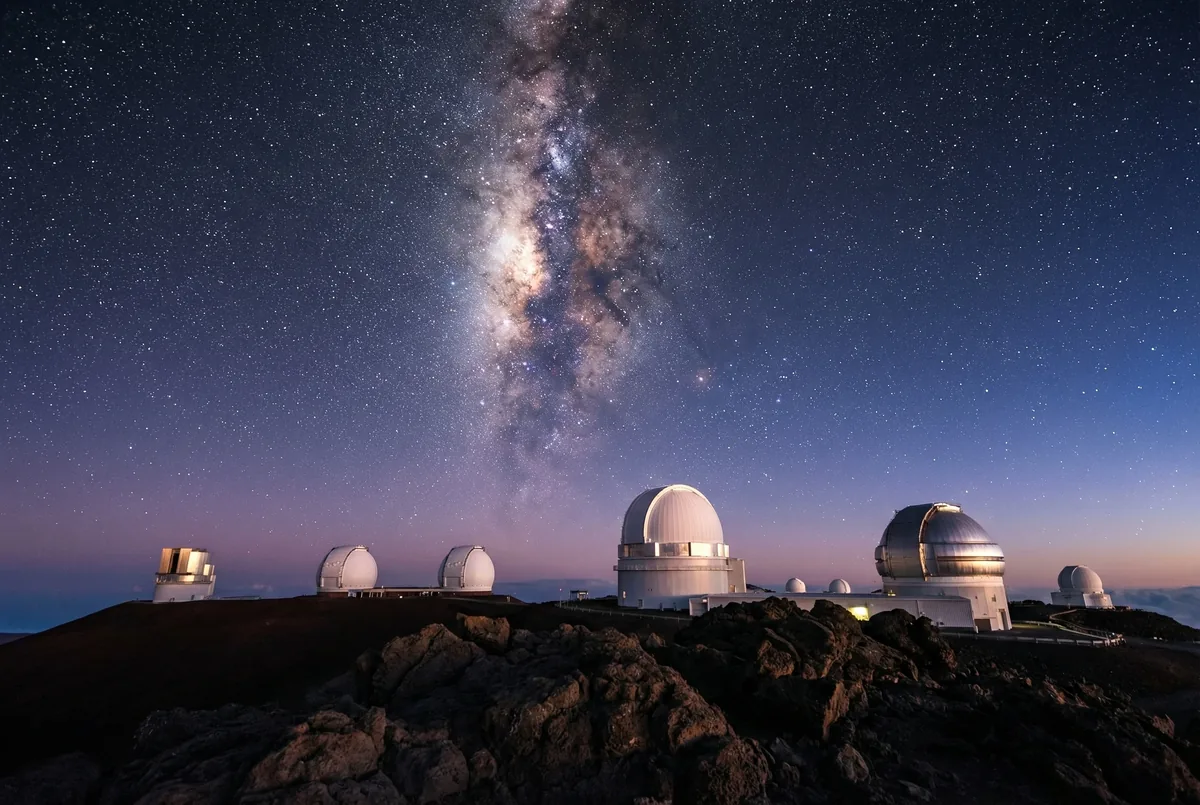
Mauna Kea rises 4,207 metres above the Pacific, and the sky above it is among the most studied on Earth. Yet the Maunakea Visitor Information Station charges nothing to stand under it, which is exactly why the question of whether to book a guide gets complicated. This page separates what a tour genuinely provides from what the mountain gives away for free.
Quick answer
Entry is free — 0 USD, with no entrance or parking fees at the Visitor Information Station, open 09:00–21:00 daily. So a guided trip is worth it mainly for transport, warm gear, telescopes and altitude supervision, not for access. Drivers with a capable 4WD vehicle, jackets and patience can replicate much of the experience independently; most visitors cannot.
The summit of Mauna Kea holds roughly a dozen working observatories, and their presence is not scenery — it is the reason the mountain is dark. Above 40 percent of the atmosphere, with stable trade-wind inversion capping the cloud deck far below, the seeing here rivals anywhere on the planet. Visitors weighing whether the mauna kea stargazing tour worth it question resolves in favour of booking should start from that fact rather than from a price. What is being sold is not the sky. The sky is free. What is being sold is logistics on a mountain that punishes improvisation. The Maunakea Access Road climbs from sea level to 2,804 metres at the Visitor Information Station, then turns to unpaved switchbacks beyond it. Rental agreements on Hawaii Island frequently prohibit that upper stretch outright. Temperatures at the station routinely fall below freezing after dark while Hilo sits in the mid-twenties, and altitude sickness — headache, nausea, poor judgement behind the wheel — arrives without warning in people who felt fine an hour earlier. A guided Mauna Kea summit tour handles the vehicle, the parkas, the acclimatisation stop and the descent when someone stops coping well. Independent visitors handle all of it themselves. The trade-off is control. Big Island stargazing excursions run on a fixed clock and a fixed route; the mountain does not always cooperate with either. Guides bring Dobsonian telescopes and laser pointers, which matter enormously for anyone who has never located Sagittarius or the Magellanic Clouds unaided. Volunteers at the station have historically offered public telescope viewing as well, though programming varies — checking the official Institute for Astronomy site before committing is sensible. Note too that the summit itself is sacred ground in Native Hawaiian tradition, and conduct there is a matter of respect, not sightseeing. The honest verdict on whether a mauna kea stargazing tour worth it depends almost entirely on one thing: whether the traveller has legitimate high-clearance transport and the confidence to use it in the dark. Those who do can arrive with a thermos and see the same Milky Way. Those who do not are buying competence, not spectacle — and on this particular mountain, competence is the expensive part.
“What is being sold is not the sky. The sky is free — what a guide provides is competence on a mountain that punishes improvisation.”
The Visitor Information Station at Mauna Kea operates daily to accommodate those planning their stargazing research and visits.
Visitors evaluating whether to book a commercial stargazing tour should understand that access to the mountain itself does not require an entrance fee. Costs for Mauna Kea stargazing primarily depend on whether you choose a guided commercial service or visit independently.
Verdict: A typical adult pays 0 USD to access the Visitor Information Station, with costs only incurred if choosing to book a commercial tour service.
The Visitor Information Station is located off Maunakea Access Road on the Big Island of Hawaii. Reaching this site requires driving via a high-elevation mountain road.
Saddle Road (Route 200) to Maunakea Access Road
Saddle Road (Route 200) to Maunakea Access Road
Arrive within the recommended window of 09:00–20:59 to allow time for altitude acclimatization. Ensure your vehicle has sufficient fuel and reliable brakes before beginning the ascent to the Visitor Information Station.
The best arrival window is 09:00–20:59; arriving mid-day is essential for proper physiological acclimatization before evening stargazing. Choosing dates outside of peak winter months helps ensure clearer skies and more stable atmospheric conditions for observation.
Clear skies, 40°F–50°F at summit
Longer daylight hours allow for sunset views before stargazing begins.
Increased snow risk, 25°F–35°F
Higher probability of road closures and cloud cover impacting visibility.
Stable, 35°F–45°F
Often provides the most reliable weather patterns for night sky viewing.
—
Arriving mid-week reduces congestion at the Visitor Information Station and parking areas.
Verdict: The best time to visit is during the shoulder months of April or October, arriving mid-day on a weekday to ensure adequate time for acclimatization.
Mauna Kea sits at high elevation with near-freezing summit temperatures after dark, so preparation matters more here than at most Hawaii stops.
Everything you need to know about mauna kea stargazing tour worth it
Determining if a mauna kea stargazing tour worth it depends on your comfort with high-altitude driving and desire for professional interpretation. Guided services often provide specialized transportation, cold-weather gear, and telescopes that you would not have otherwise.
You are not required to book a commercial service to visit the public areas of the mountain. Independent travelers can visit the Visitor Information Station to view the night sky on their own, provided they follow safety guidelines.
There is no entrance fee and no parking fee at the Visitor Information Station. The site operates daily to provide public access to the slopes of the mountain.
The best arrival window is 09:00–20:59 to allow time to acclimate to the altitude before the sky darkens. Arriving mid-day helps your body adjust, which is critical for safety at higher elevations.
Many operators have age restrictions due to the rapid change in altitude and the effects of thin air. When evaluating if a mauna kea stargazing tour worth it for families, check specific operator policies regarding minimum age and health requirements.
The primary risks include altitude sickness, freezing temperatures, and steep, unpaved road conditions. Always consult the official station guidelines and monitor your physical condition before proceeding to higher elevations.
For many, a mauna kea stargazing tour worth it because guides offer access to technical equipment and established observation spots. Professional tours allow photographers to focus on capturing images of the night sky without managing logistics.
While the Visitor Information Station is accessible via paved roads, the road to the summit often requires a 4WD vehicle. Independent visitors should verify current road conditions and vehicle requirements before attempting to drive beyond the visitor center.
Private Stargazing Experiences
Read more GuideStargazing Tips and Requirements
Read more GuideVisitor Center and Program Info
Read more GuideTemperature and Timing
Read more Tickets & toursTours from Kona
Read more Tickets & toursTours from Hilo
Read more Tickets & toursObservatory Tours & Tickets
Read more