7 hr 30 min
Mauna Kea Sunset and Stargazing Adventure from Hilo
Ascend the Pacific's highest peak for a breathtaking sunset, guided stargazing, and professional night photography.
Reserve
Hand-picked by our editors — only the best 5 experiences from 180 reviewed.
Verified partners for every tour, free cancellation where available, and instant confirmation on every booking.
7 hr 30 min
Ascend the Pacific's highest peak for a breathtaking sunset, guided stargazing, and professional night photography.
Reserve
8 hr
Travel by 4x4 to Hawaii's highest peak for a sunset viewing and guided stargazing with professional photos.
Reserve
6 hr
Discover Hawaii's night skies and volcanic landscapes with expert astronomers and high-powered telescopes.
ReservePrices from verified partners. Availability updates in real time at checkout. Free cancellation policies apply where shown.
The landmarks, rooms, and views travelers on this tour remember — all visible on a single visit.
This is the main public gateway at about 9,200 feet, and it is the place where visitors acclimate before any higher-elevation travel. The station is open daily from 09:00 to 21:00 and supports free educational programming at night.
First Light Bookstore
Silversword Garden
Solar Telescope
Mauna Kea Access Road Turnoff
Night Sky Viewing Area
They complement each other, but the mauna kea private stargazing tour is the calmer pick; most visitors who do both say the summit sunset and stargazing tour feels more dramatic, while the Visitor Information Station option is easier, lower-stress, and better for a focused sky session.
| Feature | Top pick Private Stargazing Tour | Summit Sunset and Stargazing Tour |
|---|---|---|
What you approach |
Visitor Information Station and VIS area | Summit road and summit area |
Elevation |
9,200 feet (2,804 m) | Near summit, 13,800 feet (4,200 m) |
How the evening is structured |
Arrive for dark-sky observing at VIS | Sunset first, then stargazing |
How long it takes |
About 1.5–2 hours | About 5–7 hours |
Comfort/logistics |
Lower altitude, easier acclimation | Higher altitude, rougher access |
Sky quality/crowds |
Good stars, fewer people | Higher vantage, more visitors |
| See tickets → |
Verdict: Choose the private Visitor Information Station experience for comfort and simpler logistics, or the summit sunset tour if you want the higher-elevation sunset-to-stars arc and can handle a longer, more demanding evening.
Choose your ticket, select your date, and reserve in under two minutes. Secure checkout handled by our verified partner.
Instant confirmation by email, with a mobile voucher you can save offline. No printing, no queuing at a collection desk.
Arrive at the entrance, show your voucher on your phone, and walk in. Most tickets include priority or skip-the-line access.
Practical details for your visit straight from our verified partners — hours, access, rules, and how to get there.
Dress for cold, windy conditions at 9,200 feet even if Hilo is warm. Layers, closed-toe shoes, and a wind-resistant outer layer are the safest default for a mauna kea private stargazing tour.
Bag checks are not described on the public VIS pages, but the mountain is a conservation district and a remote high-altitude site. Keep essentials compact and follow ranger directions; above the VIS, access is more restrictive and 2WD vehicles are not permitted.
Photography is allowed at the VIS and around the public viewing areas, including night skies, as long as you stay clear of telescope activity and posted restrictions. For a mauna kea private stargazing tour, tripod use is practical, but open flames, camping, and other hazardous setups are not allowed.
The VIS has accessible parking, and the public information area is the normal place to acclimate before any higher ascent. Maunakea is remote, steep, and high altitude, so mobility demands increase quickly beyond the visitor station.
Cell phone use is restricted to emergency calls only because of interference with the radio telescopes. Assume data service may be unreliable and plan to use your phone mainly for emergency contact and offline photos.
Minors must be accompanied by an adult, and children under 13 should not venture above the Visitor Information Station because of altitude risks. A mauna kea private stargazing tour is best kept to the VIS area for younger children.
The VIS has limited food service, and only small snacks are listed as available when stocked. Bring your own water and dispose of all food waste properly; open flames and camping stoves are prohibited.
Pets are not allowed, except service animals and hunting dogs when legally permitted. The official safety guidance explicitly says no pets on Maunakea, which matters for any mauna kea private stargazing tour.
The VIS is the standard acclimatization stop before any higher elevation travel, and the official guidance recommends spending at least 30 minutes there. Stargazing is weather permitting, and nighttime travel to and from the summit is discouraged.
Best time to go, insider tips, nearby landmarks, and the cancellation fine print — flip through to skim what matters to you.
Flexible, no hidden fees.
If a reservation is canceled within the operator’s stated cutoff, the refund follows the live tour grid and booking terms shown at checkout. Because the VIS itself has free public access, the entrance fee is 0 USD; any refund policy applies only to the booked tour product, not to public entry.
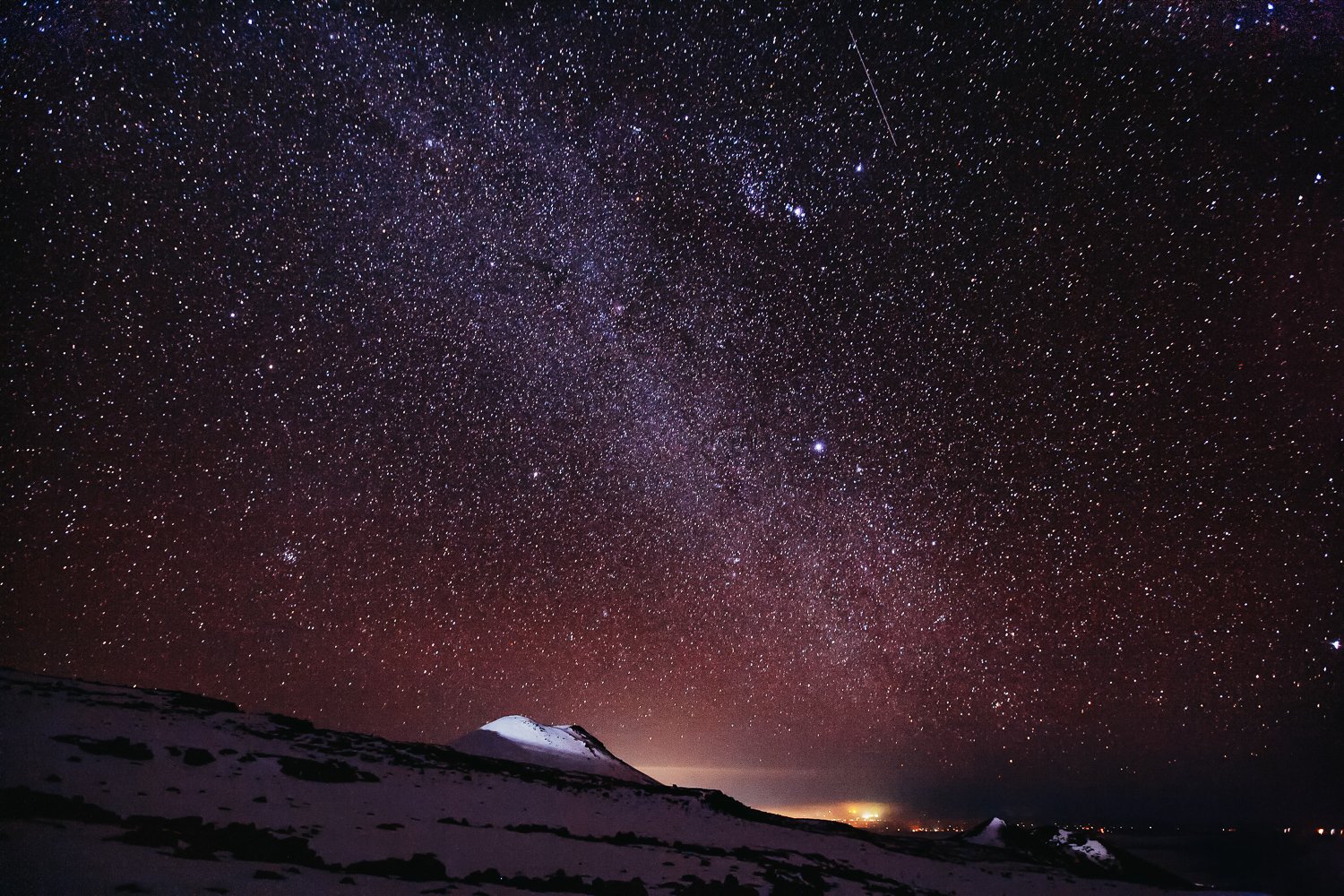
Measured from its base on the Pacific seafloor, Mauna Kea rises roughly 33,500 feet — taller than Everest — though only 13,803 of those feet break the surface. It is the highest point in the Pacific basin. That drowned scale is the source of the mountain's gift to astronomy. A persistent inversion layer traps cloud and moisture near 6,000 feet, leaving the upper slopes dry, still and dark for close to 300 nights a year. Anyone on a Mauna Kea private stargazing tour is standing above roughly forty percent of the planet's atmosphere. The volcano last erupted about 4,600 years ago. Ice-age glaciers scoured its cinder cones and left Lake Waiau, one of the highest lakes in the United States, cupped near 13,020 feet. At Keanakākoʻi, Hawaiians quarried a dense, fine-grained basalt for adze blades, working a site so cold that the labour could only be seasonal. The summit region, Kūkahauʻula, is wao akua — the realm of the gods — and remains an active place of ceremony rather than a preserved ruin. Astronomy arrived in 1964, when a rough road was cut for a University of Hawaiʻi test telescope. Thirteen observatories now stand on the cinder cones, among them the twin Keck instruments with their 10-metre segmented mirrors and the 8.2-metre Subaru Telescope. Act 255 began shifting oversight from the university to the Mauna Kea Stewardship and Oversight Authority in 2022, a transition still unfolding through 2026. It governs road access, summit conduct and the terms under which Maunakea stargazing tours and other Big Island dark-sky tours operate. Most visits stop well below the domes. The Maunakea Visitor Information Station sits at 9,200 feet, open to the public without charge, and functions as the mountain's acclimatisation point and its de facto observatory for everyone else. Above it the sky reads close to Bortle 1: the Milky Way is bright enough to cast a faint shadow, zodiacal light stands up from the horizon, and the Andromeda Galaxy is a naked-eye smear. Mauna Kea private stargazing tour tours concentrate here for that reason, pairing telescope time with the Hawaiian star lines that guided voyaging canoes across the Pacific centuries before the first mirror was hauled up the slope. Little of that lineage is decorative; wayfinding remains taught and practised on Hawaiʻi Island today.
"Above forty percent of the planet's atmosphere, the Milky Way stops being a smudge and starts casting shadows."
A step-by-step walkthrough of the visit — what you'll see, how long each stage takes, and the details that matter.
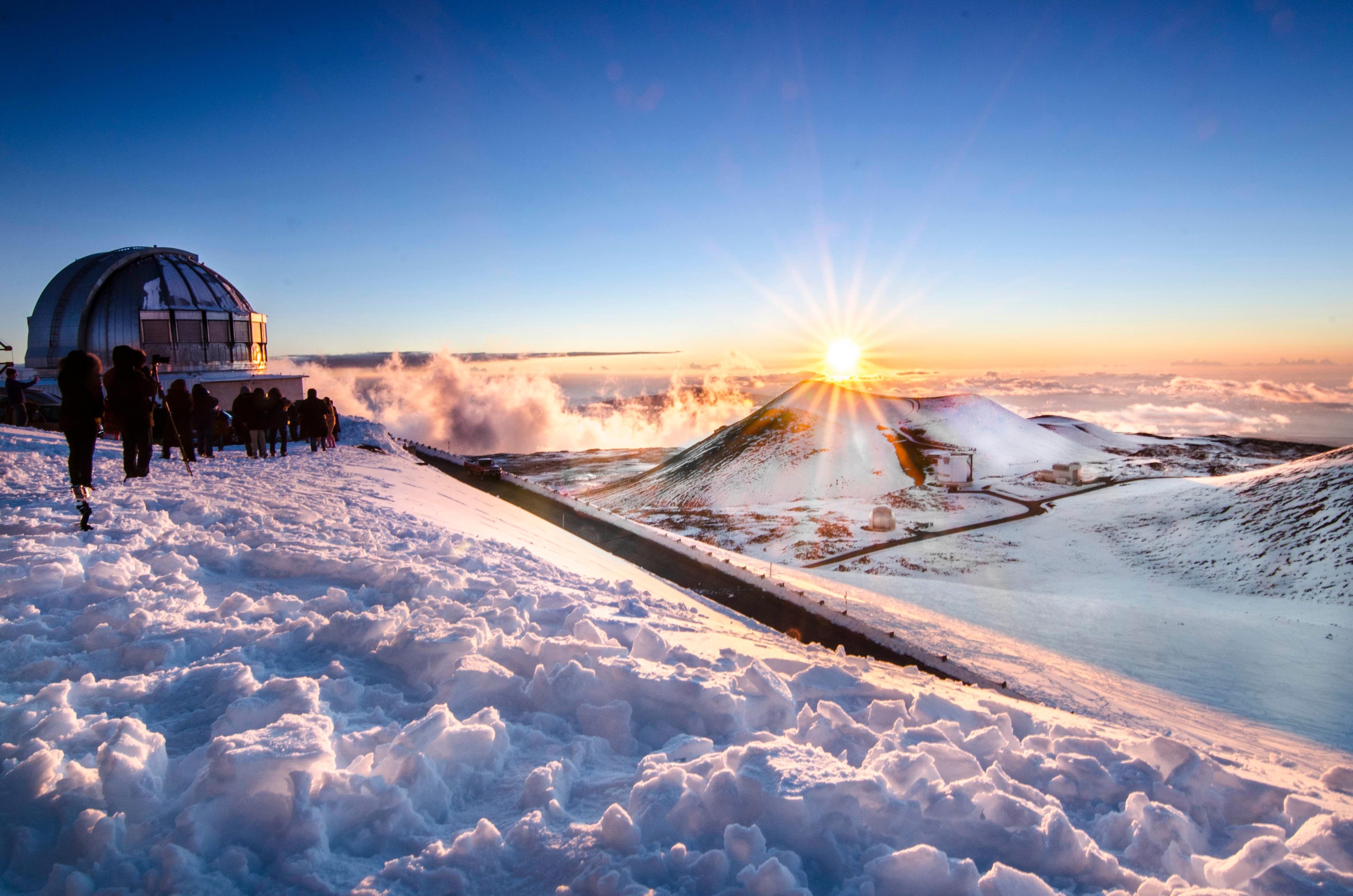
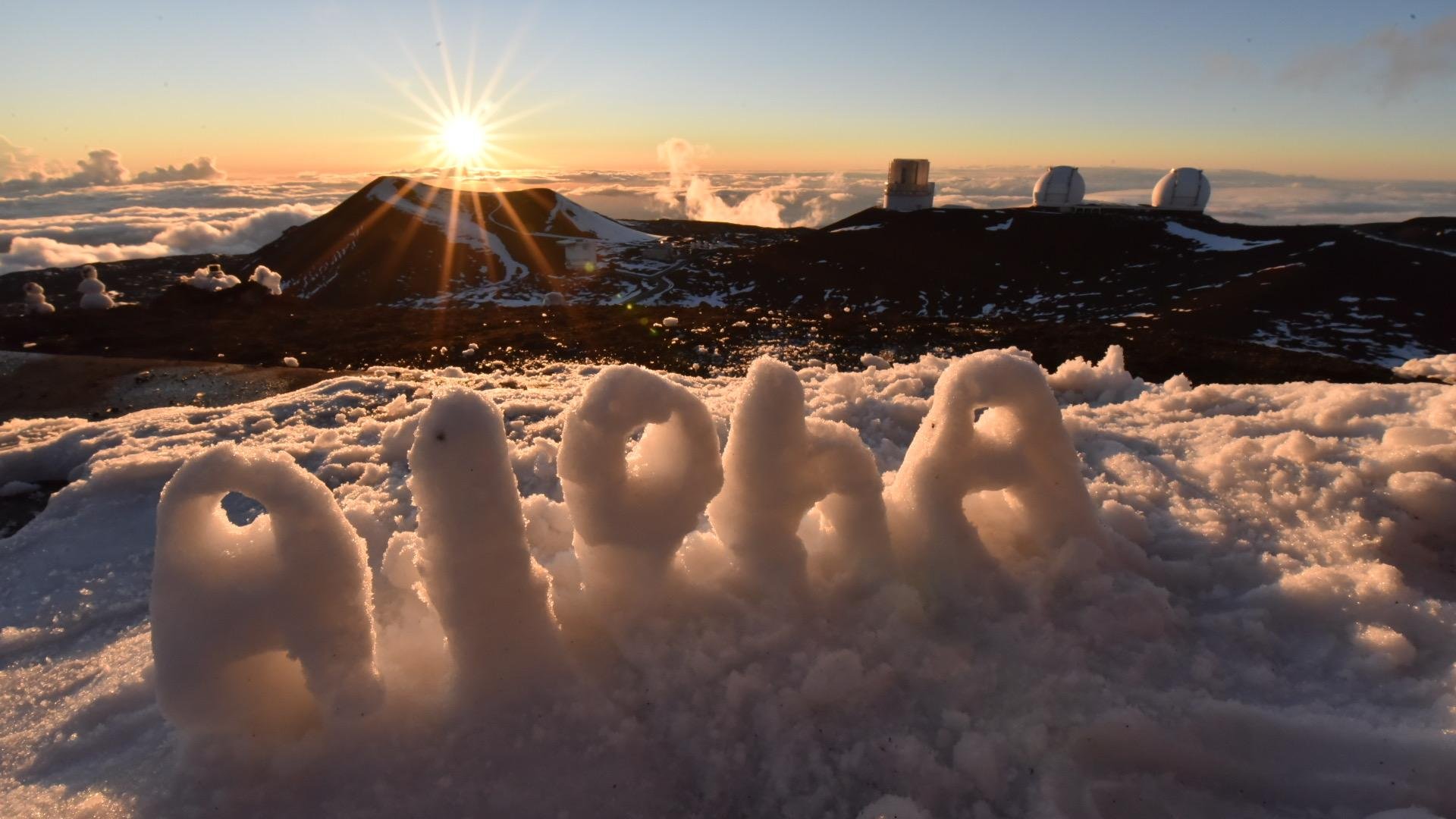
You leave the coast in daylight and climb. Saddle Road unspools between two volcanoes, Mauna Loa on one shoulder and the cinder cones of the mountain ahead, and the air cools by roughly three degrees for every thousand feet you gain. At 9,200 feet the van stops at the Maunakea Visitor Information Station. You step out into thin, cold air and are handed a parka. Arriving inside the 18:30–20:30 window puts you there for the part that matters — the sun flattening into the Pacific, the mountain's own shadow rising as a blue wedge in the eastern sky. Then the guide sets up. This is where a telescope is trained on Saturn's rings or a globular cluster, where a leader working in the Hawaiian star-line tradition names Makaliʻi and Hōkūleʻa overhead, and where, on the photography-led departures, a DSLR is fixed to a tripod and you hold still for twenty seconds while the shutter gathers the Milky Way behind your shoulders. Most Mauna Kea private stargazing tour tickets bundle pickup from Hilo or Kona, hot drinks and cold-weather gear, so you carry almost nothing yourself. You come down quiet, ears popping. Your night vision takes about half an hour to give the sky back.
The Maunakea Visitor Information Station is open daily from 09:00 to 21:00. For a mauna kea private stargazing tour, the official best arrival window is 18:30–20:30 so you can catch sunset and then darker skies.
Yes. The official visitor station hours run every day of the year, and the published schedule is 09:00–21:00 daily. For a mauna kea private stargazing tour, that makes evening visits the most practical option.
Plan to arrive in the 18:30–20:30 window. That timing matches the official guidance for sunset and dark skies, and it gives you time to acclimate before night viewing.
Use the Maunakea Access Road from the Daniel K. Inouye Highway, then turn at Milepost 28 toward the Visitor Information Station. The official site gives the VIS address as Maunakea Visitor Information Station, 177 Makaala St, Hilo, HI 96720, USA.
The entrance fee is 0 USD, because public access to the VIS is free. Any price you pay would be for a booked mauna kea private stargazing tour product, not for site entry itself.
Dress in warm layers, because the VIS sits at about 9,200 feet and temperatures can drop quickly after sunset. Closed-toe shoes and a wind layer are sensible for a mauna kea private stargazing tour.
Bring only what you can carry easily, and keep waste contained because the mountain is a conservation district. Snacks and water are fine, but open-flame cooking gear is not allowed.
Yes, photography is allowed in the public viewing areas, and the night sky is a major draw. Just keep clear of telescope operations and follow any ranger or staff instructions during your mauna kea private stargazing tour.
Children are allowed, but the official guidance says children under 13 should not go above the Visitor Information Station. For family visits, staying at the VIS is the safest choice on a mauna kea private stargazing tour.
No pets are allowed, except service animals and hunting dogs when legally permitted. That rule is explicit in the official safety guidance for Maunakea.
Refund terms depend on the live booking rules for the specific mauna kea private stargazing tour ticket you purchase. The public site itself is free, so the refund policy applies to the operator’s ticket, not to admission.
Nearby Mauna Kea landmarks include the Onizuka Center for International Astronomy Visitor Information Station, the First Light Bookstore, the silversword garden, and the public viewing areas around the VIS. Those are the easiest additions to pair with a mauna kea private stargazing tour.